


The Science of Ayurvedic Healing
Evidence-Based Ayurvedic Treatment for Joint Pain that supports mobility, comfort and long-term joint health
Joint pain can result from osteoarthritis, injuries, rheumatoid arthritis, gout, lupus, sprains and strains, tendinitis, or tumors. Ayurveda may have a role in symptom management, functional improvement and rehabilitation, but its effectiveness varies by condition.
Cause of Joint Pain | Can Ayurveda Be Considered? | Evidence-Based Position |
Osteoarthritis | Yes | May help reduce pain and stiffness and improve physical function. |
Joint Injuries | Yes | May support pain relief and rehabilitation after appropriate assessment. |
Rheumatoid Arthritis | Supportive care | May help manage symptoms, but should not replace disease-modifying treatment. |
Gout | Supportive care | May support symptom management; acute gout requires appropriate medical treatment. |
Lupus (SLE) | Supportive care only | May support wellbeing and symptom management but does not replace immunosuppressive therapy. |
Sprains & Strains | Yes | May help pain, swelling and functional recovery alongside appropriate rehabilitation. |
Tendinitis | Yes | May help reduce pain and improve function when combined with activity modification and rehabilitation. |
Joint Tumors | No, not as primary treatment | Requires imaging, specialist evaluation and tumor-specific treatment. |
Hanuveda’s primary objectives are: Reduce pain; Enhance mobility; Minimize stiffness; Enhance joint functioning; Ensure long-lasting musculoskeletal health
Does Ayurveda Treatment for Joint Pain Have Scientific Evidence?
Yes, there have been assessments of ayurvedic treatment as well as of different treatment modalities in clinical trials and systematic reviews, especially with respect to osteoarthritis and rheumatoid arthritis. This is why Ayurveda can be deemed as an evidence-based complementary method of managing joint pain rather than as a universally-acknowledged remedy.
1. Ayurvedic Interventions for Osteoarthritis – Systematic Review & Meta-analysis
Kessler and colleagues analyzed 33 randomized clinical trials conducted on 2,952 osteoarthritis patients. Evidence on the effectiveness of some ayurvedic remedies has been found in these trials, which has demonstrated an indication of improvement in pain and function; however, authors indicated the limitations of evidence as a whole.
2. Ayurvedic Formulations vs Glucosamine & Celecoxib – 440 Patients
In randomized, double-blind clinical trial involving 440 patients suffering from symptomatic knee osteoarthritis, standardized ayurvedic products were compared to glucosamine and celecoxib over a period of 24 weeks. The ayurvedic group experienced positive effects in treating knee pain and disabilities during this time; moreover, the outcomes obtained corroborated the results of balancing comparable treatments. However, authors pointed out that more thorough safety evaluation is needed as one of the participants experienced increased liver enzymes level.
3. Ayurvedic Formulation vs Hydroxychloroquine in Rheumatoid Arthritis
A controlled study carried on 121 active rheumatoid arthritis patients who were randomized underwent evaluator-independent treatment compared Ayurvedic formulations with hydroxychloroquine. The investigators reported no noticeable variation in efficacy; they concluded that the polyherbal formulation of Ayurveda is optimistic while suggesting that future trials be planned with apt design.
4. Ayurvedic Medicine, Methotrexate & Combination Therapy in Rheumatoid Arthritis
A pilot study using subjects having seropositive rheumatoid arthritis and randomized showed that methotrexate and the classical treatment of Ayurveda and a combination of both were tested for some efficacy through 36 weeks. But the differences between the groups in effectiveness reached no statistical significance proving the need for larger trials to make any conclusions.
5. Multimodal Ayurvedic Treatment for Knee Osteoarthritis – Randomized Controlled Trial, 2018
A multicenter randomized controlled trial involving 151 patients was conducted to compare effectiveness of multimodal approach of Ayurveda to other methods of treatment. In this study, the Ayurveda group showed a significant improvement in WOMAC measures after twelve weeks, and this effect was maintained after six and twelve months.
6. RA-11 Ayurvedic Formulation for Knee Osteoarthritis – 32-Week Randomized Trial
A double-blind study involving 90 patients evaluated RA-11, which is a combination of herbal preparations of different types including Withania somnifera, Boswellia serrata, Zingiber officinale and Curcuma longa. The treatment group experienced a greater decrease in pain and WOMAC scores as compared to the placebo group after sixteen weeks of treatment and eight weeks of follow-up.
7. Multimodal Ayurvedic Management of Sandhigata Vata – Clinical Study
In a clinical study with 50 subjects, a multifaceted Ayurvedic approach was investigated which included Snehana (oiling), Swedana (sweating), and Mridu Virechana (gentle detox) along with the Ayurvedic drugs. The clinical findings were promising but authors insisted on more extensive research and introduction of some objective assessments of the treatment’s efficacy.
8. Ayurvedic Formulations for Symptomatic Knee Osteoarthritis – Randomized Controlled Study
A multicenter double-blind prospective trial led by Indian authorities involved five standardized Ayurvedic drugs on a cohort of 245 patients with painful knee osteoarthritis. Among the main findings of the research are lack of significant differences between the treatment groups with respect to pain and WOMAC scores, hence indicating that one should be cautious while conducting individual studies of this kind.
9. Vatari Guggulu, Maharasnadi Kwatha & Narayan Taila – Clinical Study
In this open-label multicenter clinical study with 142 patients suffering from pain in the knee joint, a combination of the drugs Vatari Guggulu, Maharasnadi Kwatha, and Narayan Taila was used in combination with gentle massage. After the treatment, the reduction of pain on the VAS scale and WOMAC scores were observed.
10. Amrut Bhallatak Compared with Glucosamine – Randomized Clinical Trial
A randomized comparative study with 112 subjects suffering from knee osteoarthritis was conducted to compare the effects of Ayurvedic Rasayana Amrut Bhallatakam against glucosamine sulfate in a 6-month duration.
What Is Joint Pain According to Ayurveda?
Ayurveda suggests, joint disorders are mostly seen as a result of an imbalance and firing up of Vata Dosha, which consists of the elements space and air. The classic Ayurvedic disease Sandhigata Vata, which stands for a degenerative joint disease, is particularly pertinent to the problems of aging and encompasses pain, stiffness, impaired mobility and functionalities of joints.
Ayurveda takes into consideration the following factors:
In Ayurveda assessment, a person is treated as whole being instead of focusing only on the affected joints. The physician usually considers the Body Constitution (Prakriti), Current Imbalance (Vikriti), Digestive/Metabolic Capacity (Agni), lifestyle, characteristics of pain, mobility and symptoms associated with the problem before prescribing the remedy.
Therapy will depend on the illness, severity of the problem, and information from the assessment. The common approaches for treatment are:
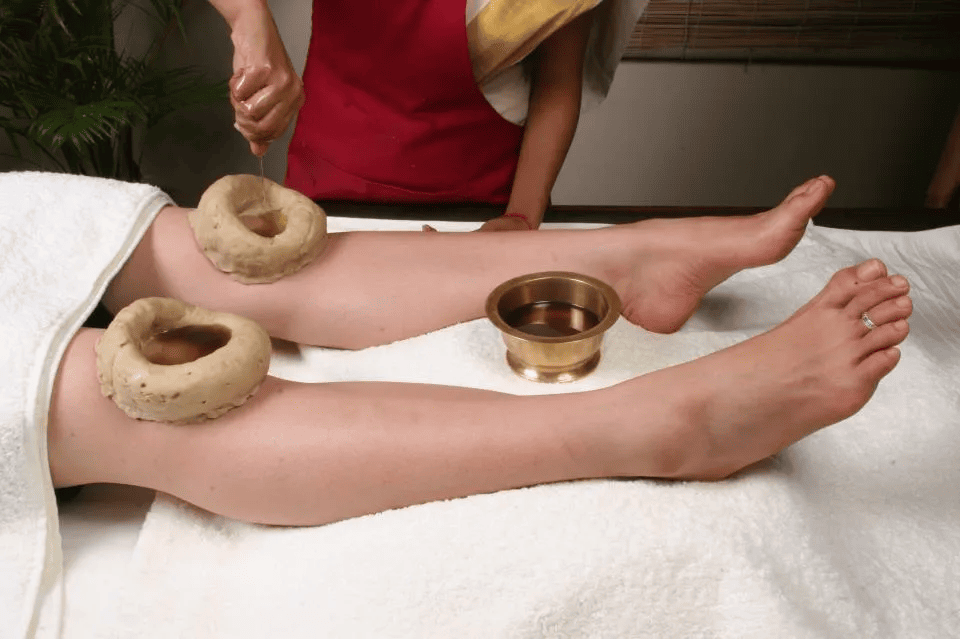
Janu Basti – Localized Knee Therapy with warm oil
Janu Basti involves keeping special warm medicated oil on the knee. It is used in the treatment of Knee Joint Pain (Janu Shoola), stiffness and problems related to Vata. Janu Basti is also studied as one of the approaches in the integrated Ayurveda treatment for knee osteoarthritis.
Abhyanga – Massage with Ayurvedic Oil
Abhyanga (performing massage) is a special massage using selected medicated oils. Abhyanga may help with comfort, mobility and relaxation of surrounding soft tissues. Depending on the condition of the patient, the physician will choose the right oil.
Swedana – Therapeutic Sweating / Fomentation
Swedana (therapeutic warm up) is a special procedure with the use of heat such as steam therapy. Swedana is used in the treatment methods combined with other techniques
Basti – Therapeutic Enema Treatment
Basti (medicated enema treatment) is an essential Panchakarma method typically indicated in illnesses related to Vata dosha.
Based on the health condition of a patient, an Ayurvedic practitioner may suggest a particular technique like Matra Basti (low-dose enema of oil-based medicine).
This procedure is to be carried out only under the supervision of professionals.
Treatment Plan Based on Panchakarma
In specific chronic cases, the treatment methods based on Panchakarma may include:
Snehana → Swedana → Basti and/or some other procedures suggested by the physician → Rasayana (rejuvenation)
It should be made in accordance with clinical assessment and Ayurveda, but not according to any norm.
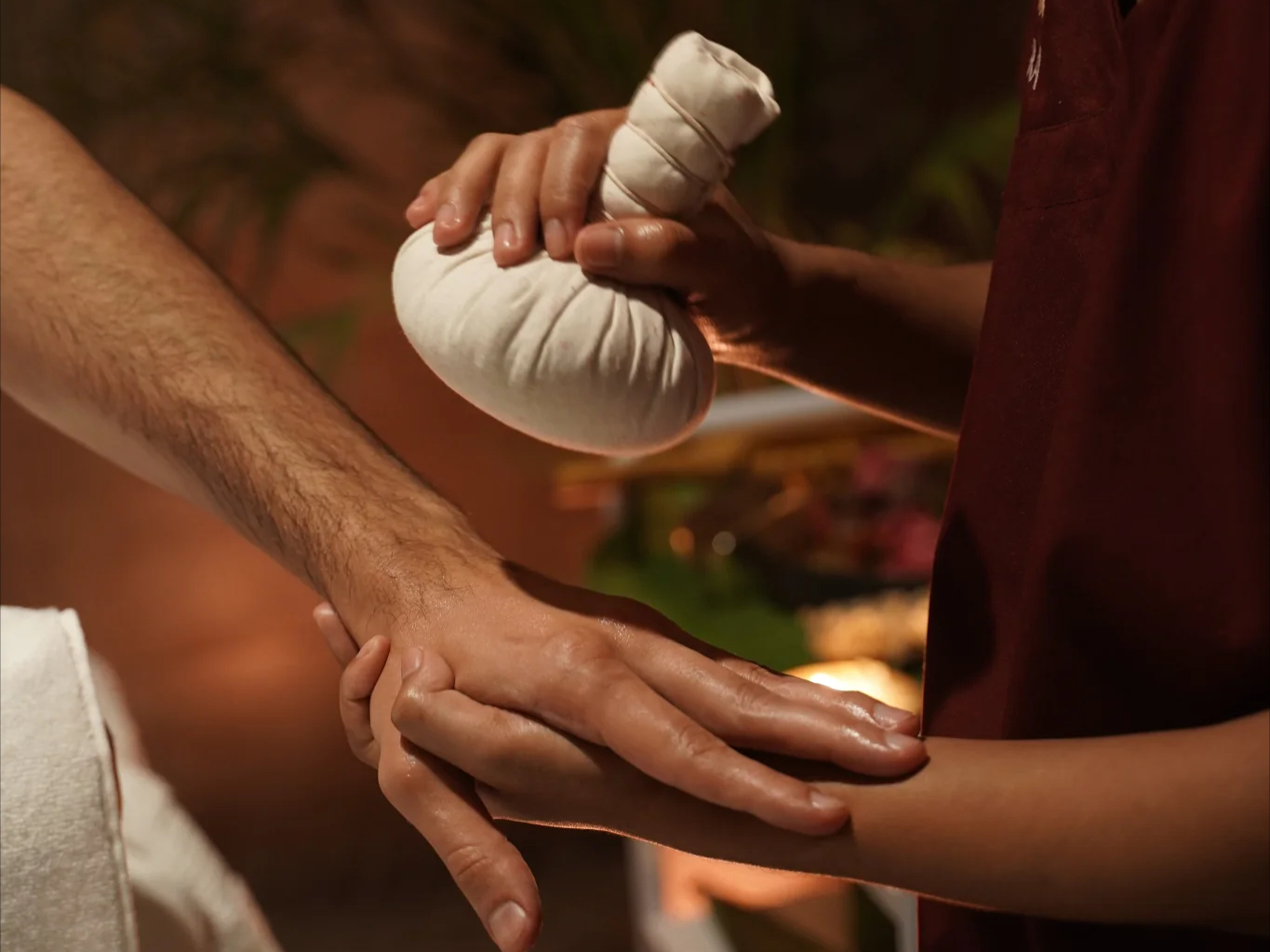
Upanaha – Herbal Compress Treatment
Upanaha (medicated herbal poultice) presupposes using herbal drugs on the localized area.
Traditionally, it is applied to assist with local pain or stiffness in muscular-skeletal disorders.
Yoga and Therapeutic Movement
Movement programs that include Yoga Asanas, Pranayama, Stretching, and Strengthening Exercises can support Mobility, flexibility, muscle strength and physical function.
Ayurvedic Medicines
Based on diagnosis, the doctors may recommend different kinds of Ayurvedic medicines such as Kashaya (decoctions), Churna (powders), Taila (medicated oils), Guggulu-based preparations, Ghrita (medicated ghee preparations) and other classical preparations.
Ayurvedic medicines should be prescribed to a patient considering his/her health state, current medication, allergies.
What Outcomes Can You Expect from Ayurvedic Joint Pain Treatment?
Pain control is only a short-term measure. A personalized program may involve:
Pain control: Decreased severity and frequency of pain in joints
Improved mobility: Feeling less restricted while walking, standing, bending, climbing stairs and other daily movements
Less stiffness: Experiencing less pain and getting more mobile after times of inactivity
Better functional capacity: Performing daily chores with relative ease
Improved life quality: Being able to engage in more physical activities in case of symptoms lessening
Permanently looking after joints: Employing techniques in exercise, weight control, posture correction, diet making and daily regime achievement for the benefits of joints health.
Types of Joint Pain That May Be Managed with Ayurveda
Osteoarthritis Pain (Sandhigata Vata) – Degenerative Joint Pain
Osteoarthritis is a type of joint disease which involves changes in cartilage, bone and soft tissues around the joint. Usually, knees, hips, wrist, elbows, shoulders and spine are affected by this disease, causing inflammation, stiffness and loss of function. Ayurveda usually connects similar conditions with Sandhigata Vata.
Rheumatoid Arthritis – Inflammatory Joint Pain
Rheumatoid arthritis is an autoimmune disease which leads to damage in the joints, resulting in pain, inflammation and stiffness of the joints. The treatment which Ayurveda provides is more of supportive nature.
Gout – Crystal-Related Joint Pain
Gout is a condition where the accumulation of uric acid in the joints causing sudden pain and swelling can be observed. Ayurveda provides dietary recommendations to avoid gout but in cases when attacks recur, more advanced treatment is required.
Post-Injury Joint Pain
Occasionally, the acute pain and inflammation develop in the joint regions after sprains or strain of ligaments. Ayurvedic treatment can be considered for rehabilitation of a patient after proper assessment, provided severe injuries to the joints have been eliminated.
Meniscus Related Knee Pain
Meniscus injuries can be characterized by pain, swelling, and clicking. Ayurveda can be applied for rehabilitation after a thorough diagnosis.
Ligament-Related Knee Pain
Ligament damage is responsible for pain and giving instability and swelling in the knee. The details of treatment will depend on how bad the damage is and which ligament is damaged. Ayurvedic medicine can be useful while recovering from the injury when appropriate.
Patellofemoral Knee Pain:
Patellofemoral Pain in the knee area may be caused by dysfunctional movement, imbalance in muscle strength and overuse. Treatment may involve physiotherapeutic exercises, movement correction and Ayurvedic therapy where it is needed.
Shoulder Joint Pain
Shoulder pain can be caused by many reasons including osteoarthritis, frozen shoulder, tendinitis, bursitis, injuries and other various diseases. Ayurvedic procedures depend on the etiological factor and can include localized procedures including Abhyanga, Swedana, Yoga therapy and rehabilitation.
Hip Joint Pain
Hip pain can arise due to various reasons like osteoarthritis, injuries, inflammation, and diseases of surrounding soft tissues. Ayurveda can provide supportive therapeutic measures after proper diagnostics through individual therapy, movement exercises and lifestyle changes.
Ankle & Foot Joint Pain
Ankle and foot pain can be caused by the same reasons including injuries, arthritis, gout, overuse or inflammation. The treatment should include identification of the cause and the use of Ayurvedic techniques to give patients symptomatic therapy.
Wrist & Hand Joint Pain
Hand and wrist pain can be caused by various conditions including osteoarthritis, rheumatoid arthritis, repetitive strain issues and injuries. According to the cause of pain Ayurveda recommends individualized therapy including localized treatment, therapeutic exercises and change of lifestyle.
Age-Related Joint Pain
Joint pain can be treated at the age when degenerative changes begin to take place and muscle strength decreases. Ayurvedic treatment may provide better healing if all factors are considered and taken into account. Ayurveda may focus on Vata management, Abhyanga, therapeutic movement, individualized therapies, nutrition and lifestyle modification.
Ayurvedic remedies and methods may be beneficial in relieving symptoms, reducing stiffness, and improving function for some individuals. Choosing the appropriate treatment depends on the particular case and its cause.
There is no single treatment that is best for every joint condition. Depending on the diagnosis, treatment may include the methods such as Abhyanga, Swedana, Basti, Janu basti, Upanaha, Panchakarma, Yoga, and lifestyle improvements.
Research studies have indicated that certain Ayurvedic techniques may be effective in alleviating pain and improving physical functioning in osteoarthritis, although success with different treatments can vary, and Ayurveda should not be perceived as a certain means for reversing cartilage wear and tear process.
Available evidence regarding claims about curative effects of Ayurveda on rheumatoid arthritis is insufficient. Certain Ayurvedic therapies can help counteract unpleasant symptoms, but it is crucial for patients suffering from rheumatoid arthritis to have constant rheumatology supervision and appropriate disease-modifyingtreatment, if necessary.
Current studies do not provide enough reasons for claiming the effectiveness of Ayurvedic remedies in regeneration of damaged cartilage. The use of Ayurvedic treatments may lead to positive results in terms of pain relief and mobility improvement.
Ayurvedic lifestyle and dietary recommendations I helpful to some extent but gout is a condition that requires an appropriate physician’s diagnosis and treatment for uric acid control.
The length of treatment varies depending on the diagnosis, severity, chronicity and response to treatment. A treatment plan is made based on personal consultation.
Properly selected Ayurvedic treatments can be used without risk of side effects. However, the herbs and treatments used may have contraindications. You should always inform your doctor of all the current medications and health problems.
Janu basti is widely used for treating various knee problems and is now undergoing evaluation in terms of multi-modal Ayurveda treatment sessions. Although the efficacy of the method has been proved in practice, there is little evidence providing the effectiveness of the method separately.
Ayurvedic treatment can be beneficial for patients who do not require surgery and need to relieve symptoms. Still, it is not possible to eliminate surgery or to prevent it using Ayurvedic treatment alone when there are serious changes in the structure of joints.
The length of treatment depends on the diagnosis, severity, chronicity, age, and how the patient responds to the therapy. Individuals receive a treatment plan based on personal indications rather than a fixed number of days.
One can benefit from the Ayurvedic treatment for knee pain after an injury, once the injury is evaluated by a specialist in medicine. Major injuries, such as those involving ligaments, the meniscus, fractures, or other structural damages, should be evaluated by the appropriate specialist first.
Yes, patients from other countries can send their medical history prior to coming to India and have their treatment customized according to their needs.
Begin Your Joint Pain Assessment
Don’t let joint pain limit your movement and everyday life.
Share your medical reports with our Ayurvedic team and receive an individualized treatment recommendation.
[Book an Ayurvedic Consultation] | [Send Medical Reports] | [International Patient Assistance]
Patients seeking Ayurvedic treatment in India can avail of services tailored to their medical history, diagnosis, and prior treatments.

Our Doors Are Open for Your Healing Journey